Seniority and Rank
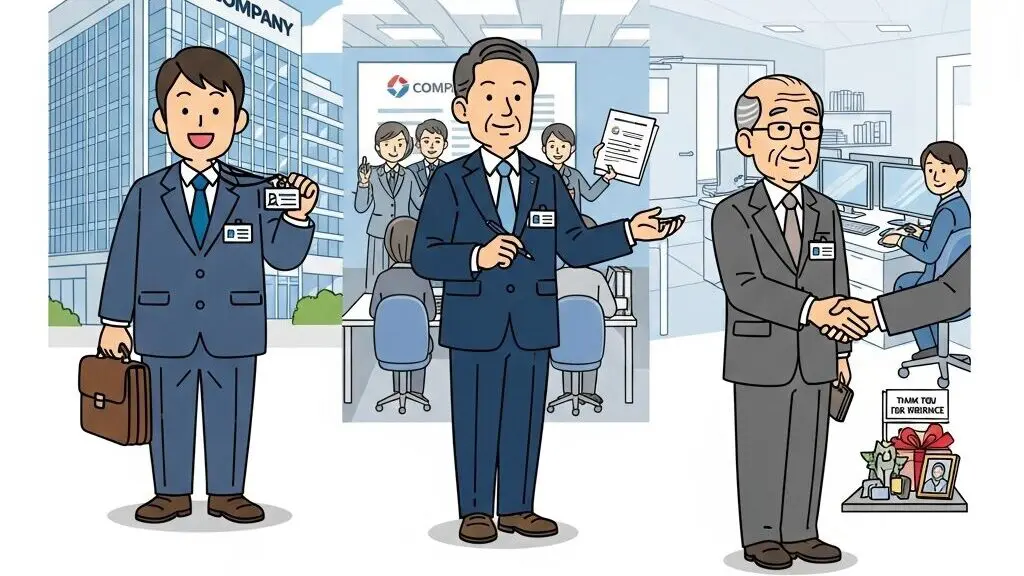
Many Japanese companies follow a pattern of hiring new employees after they graduate and rewarding their longevity with salary increases or promotions. Employees will stay with a single company for decades because the more years of loyalty create more benefits. This traditional work life is tied closely with the idea of Shūshin Koyō (終身雇用), meaning lifetime employment. Senior employees are given greater responsibility while younger workers are expected to remain loyal and learn from them. This relationship is known as the senpai–kōhai system. Senior members are called senpai (先輩) and junior members are kōhai (後輩). Senpai often guide and mentor the kōhai in workplace expectations, decision-making, and etiquette.
Source:https://jpeducareer.com/en/6-compelling-reasons-to-build-your-career-in-japan-international-job-seekers-guide/
Respectful Language
Because Japanese business culture is influenced by hierarchical relationships, an honorific language called Keigo (敬語) is used in formal settings. Communicating with keigo is an important skill in business environments. Speakers adjust their verbs and vocabulary depending on the social status of the person they are speaking with.
There are three main forms of keigo. Sonkeigo (尊敬語) is respectful language used when referring to someone of higher status. Kenjōgo (謙譲語) is humble language that lowers the speaker’s status to show respect. Teineigo (丁寧語) is polite language used in everyday formal interactions with coworkers or people you do not know well.
Source:https://www.freepik.com/free-vector/japanese-talking-eating-table_9925811.htm
Examples of Keigo (Honorific Language)
In Japanese business culture, polite language called Keigo (敬語) is used to show respect. There are three main types: respectful language (Sonkeigo 尊敬語), humble language (Kenjōgo 謙譲語), and polite language (Teineigo 丁寧語).
Common Verb Changes
| Casual | Polite | Respectful | Humble |
|---|---|---|---|
| 行く (iku – to go) | 行きます (ikimasu – to go) | いらっしゃる (irassharu – to go/come) | 参る (mairu – to go/come) |
| 言う (iu – to say) | 言います (iimasu – to say) | おっしゃる (ossharu – to say) | 申す (mōsu – to say) |
| 食べる (taberu – to eat) | 食べます (tabemasu – to eat) | 召し上がる (meshiagaru – to eat) | いただく (itadaku – to receive/eat) |
Example Sentences
| Type | Japanese | Meaning |
|---|---|---|
| Polite | 先生は来ました。 | The teacher came. |
| Respectful | 先生はいらっしゃいました。 | The teacher has arrived. |
| Humble | 私が参ります。 | I will go. |